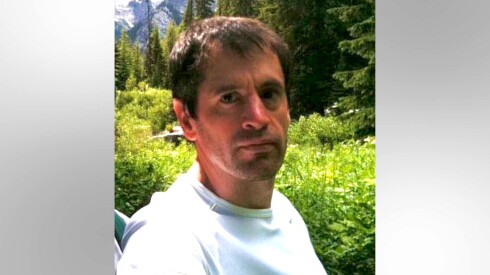
A homeless man with a history of mental illness and violent behavior was sentenced to nine years in prison Friday for throwing the punch that led to a Michigan Avenue pedestrian’s death in 2023.
Cook County Circuit Judge Charles Burns said that despite evidence that Henry Graham suffers from severe schizophrenia, the “chilling” nature of the random attack requires a stiff sentence.
Graham, 52, was found guilty of involuntary manslaughter in a bench trial in June.
Though prosecutors had charged Graham with first-degree murder, Burns found him guilty of the lesser charge, siding with defense attorneys who’d argued that under Illinois case law Graham could not have expected a single punch to kill Russell Long, a 53-year-old vice president at Northern Trust Bank.
At the sentencing hearing, Burns said Graham, who has a long record of convictions for punching and kicking people and who has active court cases for allegedly attacking an Evanston police officer and destroying jail property, “has had a life full of violence.”
“It is a factor that I’m very concerned about, that society needs to be protected from Henry Graham," Burns said.
Graham, wearing a beige jail uniform, spent most of the hearing slumped in his chair, staring down at the defense table.
Asked by Burns if he had anything to say, Graham replied, “I really don’t have anything to say. I never thought that I’d be responsible for laying someone to rest.”
Later, when Burns asked him whether he wanted to appeal his conviction, Graham said, “For manslaughter? No.”
After talking to his attorney, he changed his answer to, “OK, yes.”
Long was out shopping on the day of the attack in June 2023, carrying a pair of new blue jeans in a shopping bag and walking south near 630 N. Michigan Ave.
Without warning, Graham zoomed up behind Long and punched him in the back of his head. Long pitched forward, hitting the sidewalk with his face.
Long suffered extensive head injuries, including facial and skull fractures and bleeding of his brain. He died 13 days later at Northwestern Memorial Hospital.
Immediately after the attack, witnesses pointed Graham out to Chicago police. Police say Graham admitted he hit Long but claimed it happened after Long bumped into him.
Officers released Graham.
Graham was accused of attacking other people in the following months, according to police reports.
Long’s death and Graham’s history were featured last year in a Chicago Sun-Times series, “Failure to treat, failure to protect,” about downtown attacks by people with severe, untreated mental illness who cycle in and out of jails, prisons and hospitals.
Assistant Cook County State’s Attorney Sean Brady, who pushed for a 10-year prison sentence, read victim impact statements from Long’s older brother, Daniel Long, and Kristen Maurice, a longtime friend of Long.
Daniel Long wrote: “I cannot put into words how horrific his passing was.” He described his younger brother as “unrecognizable” in the intensive care unit.
“The last images of him will haunt me forever,” he wrote.
He added that Graham’s history was one of “basically assault and release, assault and release, assault and release – until somebody is killed.”
Maurice wrote about Russell Long’s kindness, intelligence, sense of humor and love of photography and music. “I still can’t go near Michigan Avenue, the street Russ and I walked countless times,” she wrote.
Assistant Public Defender Celeste Addyman asked Burns to consider that in Graham’s mind, Graham thought he had been provoked, which is why he threw the punch — an argument Burns found unpersuasive.
Tragedies like Long’s killing prompted the General Assembly to pass a measure to address the issue of mental illness in people charged with crimes.
The legislation, signed last year by the governor, set up a task force that on Friday approved recommendations to address how those people are evaluated and treated. Next week, the committee will vote on ways to pay for those recommendations.
The task force hopes to improve the process for determining if a defendant with mental illness can be treated outside jail as an “outpatient” or must wait in jail for a bed to open up in a state-operated mental health facility.
One aim is to keep people with brain disorders like Alzheimer’s disease out of state mental hospitals to make room for people who have serious psychiatric conditions and are charged with the most serious crimes.
The Sun-Times’ series found a persistent lack of state beds for defendants who judges say must be evaluated and treated to become mentally fit for trial.
The task force has members from the General Assembly, the courts, law enforcement and the mental health system. Under the law, it must deliver a report by Nov. 1.